


Medical excellence. Personalized care. Without borders.
Connecting international patients with first-class healthcare and experienced specialists in Spain for a seamless and trusted medical experience.

42
Client satisfaction rating reflects our commitment to quality
Call us for quick assistance, questions, or immediate support.
Contact
+(34) 616042241
Shedual Hours
Our facility is open to serve you every week.
Monday - Friday
9AM - 02PM | 03PM - 06PM
Visit Health Center
Our facility is open to serve you every week. We are also available for emergency care.
Schedule your consultation online in a few simple steps.
Provide Service
International healthcare, thoughtfully coordinated around you.
01 · Initial medical guidance
We listen to each patient’s needs, review the available information and help identify the next steps towards a specialist assessment.
02 · Consultations and second opinions
We arrange in-person or remote appointments with suitable physicians, including reviews of diagnoses and possible treatment options.
03 · Specialist and hospital connections
We connect patients with healthcare professionals and medical centres in Spain according to the required specialty and the circumstances of each case.
04 · Treatment and surgical coordination
We facilitate communication with clinical teams, coordinate appointments and procedures, and assist with preparing relevant medical records.
05 · Cost estimates and practical information
We help gather treatment proposals, indicative costs and administrative details so patients can make betterinformed decisions.
06 · Travel and accommodation support
We provide guidance on transport, accommodation and practical arrangements for a medical stay in Spain, working with external providers where appropriate.
07 · Language and cultural assistance
We support communication in Arabic, English and Spanish to help patients, families and medical teams understand one another.
08 · Follow-up and continuity of care
We assist with arranging reviews, reports and post-treatment communication, including after patients return to their country of residence.
Specialists
Comprehensive healthcare solutions, meticulously tailored to your needs.
Female fertility and reproductive medicine
1. Female fertility assessment
The first consultation reviews age, time trying to conceive, menstrual cycles, previous pregnancies, surgery, medical conditions, medication and family history. Tests are tailored to the individual.
Transvaginal ultrasound assesses the uterus and ovaries, fibroids, polyps, cysts and antral follicle count (AFC). Blood tests may include anti-Müllerian hormone (AMH), FSH and estradiol in the appropriate context, plus TSH and prolactin when indicated. AMH and AFC help estimate response to stimulation but do not independently predict natural pregnancy.
Ovulation may be assessed through cycle history and sometimes luteal progesterone. Tubal patency can be examined using hysterosalpingography (HSG) or contrast ultrasound (HyCoSy). Saline sonography or hysteroscopy may assess suspected uterine cavity problems.
Further targeted investigations may be appropriate for suspected endometriosis, polycystic ovary syndrome, recurrent pregnancy loss or inherited conditions.
2. Assisted reproduction options
Ovulation induction uses medication and ultrasound monitoring when ovulation is irregular. Intrauterine insemination (IUI) places prepared sperm inside the uterus at the appropriate time when suitable.
In vitro fertilisation (IVF) involves ovarian stimulation, egg retrieval, fertilisation in the laboratory, embryo culture and transfer. Intracytoplasmic sperm injection (ICSI) injects one sperm into an egg and is particularly useful in selected male-factor cases.
Egg or embryo freezing may preserve options for later. Frozen embryo transfer takes place in a subsequent prepared cycle. Treatment choice depends on age, diagnosis, preferences, applicable law and expected outcomes.
Treatment may involve side effects, multiple pregnancy, ovarian hyperstimulation (uncommon with modern protocols), costs and more than one attempt.
3. Genetic testing: embryos and pregnancy
Before treatment, genetic counselling and carrier screening may be considered when indicated. Parental karyotyping is useful in selected circumstances.
PGT-M tests for a specific inherited single-gene condition in at-risk families. PGT-SR examines chromosomal imbalance linked to certain parental rearrangements. PGT-A assesses chromosome number; routine use for all IVF patients is not recommended, and benefit varies by situation.
Embryo biopsy and results have limitations, including mosaicism. A normal result does not guarantee a healthy baby or replace prenatal care.
During pregnancy, first- and second-trimester ultrasound and chromosomal screening may be offered. Cell-free DNA testing (NIPT) is a screening test, not a diagnosis. Chorionic villus sampling or amniocentesis can provide diagnostic testing when indicated, after counselling about risks and benefits.
4. Follow-up, pregnancy and perinatal care
After IUI or embryo transfer, a pregnancy blood test (beta-hCG) is arranged. If positive, ultrasound confirms the pregnancy location and development. Medication and warning signs are reviewed.
Antenatal care may include ultrasound, blood pressure checks, blood tests, gestational diabetes screening and fetal growth monitoring according to risk. Birth and postnatal care can be coordinated with obstetrics, anaesthesia, neonatology and paediatrics as needed.
The care plan and birth setting are adapted to medical needs, patient preferences and available services.
5. Male factor: assessment by an andrologist
Fertility assessment should consider both partners. The andrologist reviews history, testicular examination, varicocele, medication, lifestyle, surgery and infections. Semen analysis (often repeated if abnormal) assesses sperm count, motility and morphology.
Depending on findings: morning testosterone, FSH, LH, prolactin and other hormones; scrotal ultrasound when indicated. In selected azoospermia or severe sperm disorders: karyotype, Y-chromosome microdeletion testing and CFTR testing when congenital absence of the vas deferens is suspected.
Sperm DNA fragmentation testing may be considered in selected cases but is not routine for everyone. Treatment may include lifestyle measures, correcting reversible causes or microsurgical varicocele repair in selected men.
If no sperm are present in the ejaculate, surgical sperm retrieval with TESE or micro-TESE (especially in non-obstructive azoospermia) may be considered, followed by ICSI if sperm are obtained. Retrieval cannot be guaranteed.
MSC: personalised, coordinated care
MSC – Medical Services Connection helps patients navigate and coordinate care with reproductive medicine, andrology, genetics and obstetric specialists in Barcelona according to individual needs. Confidentiality, clear communication and support throughout the journey.
Availability of tests and treatments depends on medical indication, the partner centre and current Spanish law. This information does not replace an individual medical consultation.
Shoulder surgery and hand surgery
Specialist care in Barcelona: from diagnosis to rehabilitation
Comprehensive, personalised care
Our specialists assess pain, injuries and restricted movement affecting the shoulder, hand and wrist. The aim is to relieve symptoms, restore function and select the most appropriate treatment for each patient.
1. Diagnosis: how do we assess your condition?
Your appointment begins with a medical history and examination of movement, strength, sensation and joint stability. Depending on your symptoms, tests may include X-rays, musculoskeletal ultrasound, MRI or CT. Electromyography and nerve conduction studies may be useful for certain nerve conditions.
2. Shoulder surgery: conditions we treat
We assess rotator cuff tears, tendon disorders, biceps injuries, dislocations and instability, labral tears, frozen shoulder, arthritis and fractures. Surgery is not always required: the decision depends on the diagnosis, severity, age, activity level and personal goals.
3. Shoulder treatment and surgery
Options include physiotherapy, activity changes, pain medication and selected injections. When appropriate, arthroscopy can be used for tendon repair or stabilisation; other procedures include fracture fixation and anatomical or reverse shoulder replacement. Your surgeon will explain the benefits, risks and alternatives.
4. Hand and wrist surgery: conditions we treat
We assess carpal tunnel syndrome, trigger finger, Dupuytren disease, ganglion cysts, thumb-base arthritis, hand and wrist fractures, tendon and nerve injuries, and problems following trauma. Some injuries need prompt assessment to protect function.
5. Hand treatment and surgery
Depending on the condition, treatment may involve splints, hand therapy, medication or injections. Surgery may include carpal tunnel or trigger finger release, treatment of Dupuytren disease, fracture fixation, tendon or nerve repair and reconstructive procedures. Each treatment plan is individualised.
6. After surgery: practical care
Your team will explain wound care, pain and swelling control, the use of a sling, splint or dressing, and follow-up appointments. Protect the operated area and move only the joints you have been advised to move. Dressings, stitch removal and reviews depend on the procedure.
7. Rehabilitation and functional recovery
Rehabilitation is essential. Shoulder recovery may progress from protected movement to active exercises, strengthening and everyday activities. Hand therapy may include swelling control, scar management, custom splints, tendon-gliding exercises, sensory recovery and dexterity training. Recovery varies: some procedures allow a return to activities within weeks, while tendon repairs, complex fractures and joint replacements may take months.
8. Follow-up and safety
Follow-up visits assess pain, movement, strength and healing, and help adjust physiotherapy. Seek urgent medical care for fever, rapidly increasing pain or swelling, wound discharge, new loss of sensation, cold fingers or marked colour changes.
MSC: support for international patients
MSC helps coordinate specialist assessment, diagnostic tests, surgery when needed and rehabilitation follow-up in Barcelona. A definitive treatment plan is made only after an individual medical assessment.
Dentistry and oral & maxillofacial surgery
From routine dental care to complex facial reconstruction
MSC – Medical Services Connection helps international patients access coordinated dental, oral surgery and maxillofacial specialist assessments in Barcelona. Treatment is tailored to each patient’s diagnosis, needs and goals.
01 · Prevention and routine care
Regular check-ups. Assessment of teeth, gums, oral lining, bite and jaw joints, with risk assessment and imaging when appropriate. Check-up intervals are individualised.
Hygiene and prevention. Professional cleaning when needed, brushing and interdental care advice, fluoride when indicated, and prevention of tooth decay and gum disease.
Early detection. Assessment of persistent mouth ulcers, patches, lumps or bleeding. Suspicious lesions may require biopsy and pathology testing.
02 · Specialist diagnosis
Clinical examination and imaging. Medical and dental history, oral and facial examination, dental X-rays and panoramic imaging; cone-beam CT (CBCT) or CT in selected cases.
Additional investigations. Photographs, intraoral scanning, digital models, periodontal assessment, tooth vitality tests, biopsy and MRI when indicated, such as for soft tissue or jaw-joint conditions.
Multidisciplinary planning. Dentists, periodontists, endodontists, orthodontists, implant specialists, maxillofacial surgeons, radiologists and other clinicians work together as needed.
03 · Dental treatments
Restorative dentistry and root canals. Fillings, restorations, root-canal treatment and repair of damaged teeth, aiming to preserve viable natural teeth.
Gum care. Treatment of gingivitis and periodontitis, scaling and root planing, selected periodontal surgery and long-term maintenance.
Prosthetics, implants and aesthetics. Crowns, bridges, removable dentures, dental implants, bite rehabilitation and appropriate cosmetic treatments.
Orthodontics and bite. Correction of tooth alignment and bite problems with braces or aligners, while assessing function and gum health.
04 · Oral and maxillofacial surgery
Common oral surgery. Wisdom-tooth and impacted-tooth removal, odontogenic cyst surgery, apicoectomy and bone preparation for implants.
Bone reconstruction and advanced implants. Bone grafts, guided bone regeneration, sinus lifts and digital planning, selected according to bone availability and clinical needs.
Jaw deformities and orthognathic surgery. Treatment of jaw discrepancies, functional bite problems and facial asymmetry, usually coordinated with orthodontics.
Trauma and temporomandibular joint. Assessment and treatment of facial fractures, dental-alveolar injuries, TMJ disorders and orofacial pain, using conservative measures first when appropriate.
05 · Tumours of the mouth, jaws and face
Diagnosis and staging. Examination, biopsy, pathology and imaging (CT, MRI and other tests as appropriate). Treatment should ideally be reviewed by a multidisciplinary tumour board.
Cancer treatment. Surgery may involve tumour removal and, in selected cases, neck lymph-node surgery. Radiotherapy, systemic therapy or other treatments depend on tumour type and stage.
Complex reconstruction. Rebuilding the mandible, maxilla, tongue, oral lining or facial tissues using grafts, local flaps or microsurgical free flaps; 3D planning and surgical guides may help in selected cases.
Functional recovery. The aim is to preserve or restore chewing, swallowing, speech, breathing and facial appearance where possible. Dental rehabilitation, speech and swallowing therapy, nutrition and psychological support may be needed.
06 · Aftercare and rehabilitation
Immediate care. Individual advice for pain, swelling, bleeding, oral hygiene, diet and medicines. Avoiding smoking supports healing.
Dental and functional rehabilitation. Wound reviews, denture or implant restoration, jaw physiotherapy when indicated, mouth-opening exercises, swallowing and speech therapy, and gradual dietary progression.
After major or cancer surgery. Wound and flap monitoring, nutritional care, neck and shoulder rehabilitation where appropriate, oncology coordination and recurrence surveillance according to the care plan.
Warning signs. Persistent heavy bleeding, breathing or swallowing difficulty, high fever or rapidly worsening pain or swelling require urgent assessment.
07 · International patient pathway with MSC
Before travel. Review of available reports and scans, and coordination of an initial assessment with the appropriate team.
During the stay. Organisation of consultations, investigations, treatments and follow-up appointments, with clear explanations at each stage.
After returning home. A follow-up and rehabilitation plan, medical documentation and coordination with local clinicians where possible.
General patient information only; not a substitute for individual medical advice. Procedures, risks and recovery times vary by patient. MSC · Medical Excellence. Personalised Care. Beyond Borders.
Ophthalmology and eye surgery
From routine eye examinations to complex ocular surgery
MSC– Medical Services Connection coordinates ophthalmic assessment and care for international patients in Barcelona, from prevention and diagnosis to medical and surgical treatment and individual follow-up.
01 · Routine examinations and prevention
Regular eye checks. Visual acuity, refraction, slit-lamp examination, eye pressure and retinal examination when indicated. Follow-up intervals depend on age and risk factors.
Eye health. Assessment of dry eye, allergies, blepharitis, eye strain and visual complaints. Advice on UV protection, contact lenses and healthy habits.
Early detection. Risk-based screening for glaucoma, cataracts, diabetic retinopathy and age-related macular degeneration.
02 · Specialist diagnosis
Imaging and functional tests. Optical coherence tomography (OCT), retinal photography, visual fields, corneal topography/ tomography, pachymetry and ocular biometry as appropriate.
Further investigations. Retinal angiography, ocular ultrasound, ocular surface testing or neuro-ophthalmic assessment in selected cases.
Treatment planning. Clear explanation of findings, options, potential benefits, limitations and risks, supporting shared decisions.
03 · Medical care and common procedures
Cataract surgery. Removal of the cloudy natural lens and implantation of an intraocular lens. Lens choice depends on eye measurements and visual needs.
Refractive surgery. Assessment for LASIK, PRK, SMILE or other approaches, including phakic lenses, after careful corneal and ocular evaluation.
Glaucoma. Eye drops, laser and surgery, including minimally invasive procedures for suitable patients, to lower eye pressure and protect the optic nerve.
Cornea and ocular surface. Management of keratoconus (including cross-linking in selected cases), corneal disease, complex dry eye and corneal transplantation when indicated.
04 · Retina, vitreous and complex conditions
Medical retina. Care for macular degeneration, diabetic macular oedema, retinal vascular occlusions and other conditions, including intravitreal injections or laser when appropriate.
Vitreoretinal surgery. Vitrectomy for retinal detachment, vitreous haemorrhage, epiretinal membrane or macular hole when indicated.
Paediatric ophthalmology and strabismus. Assessment of amblyopia, refractive errors and squint, with glasses, patching or surgery when appropriate.
Neuro-ophthalmology and orbit. Assessment of optic nerve disorders, double vision and orbital disease in collaboration with other specialists.
05 · Oculoplastics, trauma and tumours
Eyelids and tear ducts. Treatment of drooping or malpositioned eyelids, tear drainage obstruction and benign lesions.
Eye injuries. Urgent care for penetrating injuries, foreign bodies, orbital fractures or traumatic visual loss, tailored to severity.
Eye and periocular tumours. Assessment of eyelid, conjunctival, orbital and intraocular lesions using examination, imaging and biopsy when appropriate.
Surgery and reconstruction. Tumour removal, eyelid or orbital reconstruction, and selected eye-preserving treatments, radiotherapy or coordinated oncological surgery.
06 · Aftercare and visual rehabilitation
After surgery. Correct use of prescribed drops, hygiene, eye protection, review visits and temporary activity restrictions depending on the procedure.
Visual rehabilitation. Updated spectacles, low-vision aids, orthoptic therapy for specific indications and functional support when sight recovery is incomplete.
Long-term follow-up. Monitoring of eye pressure, retina, cornea or tumour recurrence as required; some conditions need repeated treatment.
Urgent warning signs. Sudden loss of vision, flashes with a sudden shower of floaters or a curtain-like shadow, severe eye pain or trauma need urgent assessment.
07 · International care with MSC
Before travel. Review of existing reports and tests and arrangement of the appropriate specialist consultation.
During the stay. Coordination of tests, treatment, surgery and follow-up, including expected recovery guidance.
After returning home. Medical documentation, follow-up instructions and coordination with a local eye specialist when possible.
General patient information only; not a substitute for an ophthalmologist’s assessment. Indications, risks and recovery vary between patients. MSC · Medical Excellence. Personalised Care. Beyond Borders.
Rapid Cancer Diagnostic Unit
Coordinated assessment when cancer is suspected
MSC – Medical Services Connection helps international patients access coordinated cancer assessment in Barcelona. The aim is to avoid unnecessary delays, establish an accurate diagnosis and define next steps with a multidisciplinary team. Timing depends on clinical urgency and test availability; a diagnosis within a fixed period cannot be guaranteed.
01 · When to seek assessment
Symptoms and findings. A new lump, unexplained weight loss, unusual bleeding, persistent cough, changes in bowel habits, swallowing difficulties or a suspicious scan may warrant assessment. These findings do not necessarily mean cancer.
Initial assessment. Review of medical history, risk factors, examination and previous test results. Specialists select appropriate investigations to avoid duplication and unnecessary procedures.
Emergency situations. Severe breathlessness, heavy bleeding, sudden neurological symptoms or bowel obstruction require emergency care rather than a scheduled appointment.
02 · How the unit works
Initial review. Collection of reports, scans and laboratory results, with clinical prioritisation based on symptoms and level of concern.
Targeted investigations. Blood tests, ultrasound, CT, MRI, endoscopy or organ-specific tests as indicated. PET-CT is reserved for appropriate cases.
Confirming a diagnosis. Biopsy or cytology when needed, with pathology, immunohistochemistry and selected molecular tests. Imaging alone cannot always confirm cancer.
Multidisciplinary review. Organ specialists, radiologists, pathologists, medical and radiation oncologists and surgeons discuss complex cases and tailor care.
03 · Lung tumours
Possible warning signs. A lung nodule on imaging, persistent cough, coughing up blood or unexplained breathlessness.
Diagnosis. Chest CT; bronchoscopy, endobronchial ultrasound (EBUS) or image-guided biopsy depending on location; staging and biomarkers when a tumour is confirmed and testing is indicated.
Next steps. Thoracic surgery, oncology and radiotherapy assessment according to tumour type, stage and overall health.
04 · Urological tumours
Scope. Suspected prostate, bladder, kidney, testicular and urinary tract cancers.
Diagnosis. PSA and prostate MRI with biopsy when appropriate; cystoscopy and haematuria assessment; renal ultrasound or CT; testicular ultrasound and selected tumour markers.
Next steps. Individualised decisions about surveillance, surgery, systemic treatment or radiotherapy according to diagnosis and stage.
05 · Digestive system tumours
Scope. Oesophagus, stomach, colon, rectum, liver, pancreas and bile ducts.
Diagnosis. Gastroscopy or colonoscopy with biopsy when indicated; CT or MRI; endoscopic ultrasound and targeted hepatobiliary tests as appropriate.
Next steps. Review by gastroenterology, surgery, oncology and other relevant specialists for staging and treatment.
06 · Gynaecological tumours
Scope. Suspected cervical, endometrial, ovarian, vulval and other gynaecological cancers.
Diagnosis. Gynaecological examination, transvaginal ultrasound, cervical tests, colposcopy and endometrial or lesion biopsy when indicated; MRI or CT in selected cases.
Next steps. Gynaecological oncology and multidisciplinary planning, including fertility and quality-of-life considerations where relevant.
07 · Breast tumours
Possible warning signs. Breast or armpit lump, bloody nipple discharge, skin changes or an abnormal screening result.
Diagnosis. Clinical examination, mammography and ultrasound according to age and circumstances; core needle biopsy of suspicious lesions and receptor/HER2 testing if cancer is confirmed.
Next steps. Breast team review for surgery, systemic therapy and radiotherapy; reconstruction and genetic counselling when indicated.
08 · Results, treatment and follow-up
Clear report. Summary of findings, confirmed or pending diagnosis, stage where possible, remaining tests and treatment options.
Whole-person support. Coordination with specialist nurses, psychological care, nutrition, rehabilitation and supportive services as needed.
International patients. Pre-travel guidance, appointment coordination, clinical documents and a plan for continued care with clinicians in the home country.
General patient information, not a substitute for medical advice or a screening programme for people without symptoms. Tests and timelines are individualised.
MSC · Medical Excellence. Personalised Care. Beyond Borders
International Preventive Medicine & Early Detection Programme
Three personalised health assessment programmes for international patients
MSC – Medical Services Connection coordinates preventive healthcare assessments in Barcelona for people without symptoms. The goals are to identify modifiable risks, provide evidence-based screening and develop an individual health plan. Tests are selected according to age, sex, medical history and clinical assessment.
Essential · Core prevention
For symptom-free adults who want to review their general health and risk factors. Includes medical and family history, medication and vaccination review, examination, blood pressure, weight, waist measurement and lifestyle assessment. Blood tests are riskbased (such as lipids, glucose or HbA1c, and kidney function). A concise report sets out prevention priorities and practical recommendations.
Advanced · Extended assessment
Adds a broader cardiometabolic risk review and age-appropriate screening to the core assessment. Includes a results review by a primary care or internal medicine physician, an initial cardiovascular assessment and coordination of indicated screening, such as faecal immunochemical testing (FIT), mammography, cervical screening or colonoscopy. Ultrasound and other imaging require a clinical indication.
Executive · Coordinated preventive care
For patients seeking centralised scheduling and multidisciplinary review. Includes Advanced, an integrated internal medicine consultation and appropriate specialist visits based on risk (for example cardiology, gynaecology, urology or gastroenterology). Includes an executive summary, 12-month prevention plan and remote results follow-up. It does not mean that every test or specialty visit is routinely performed.
Proposed service comparison
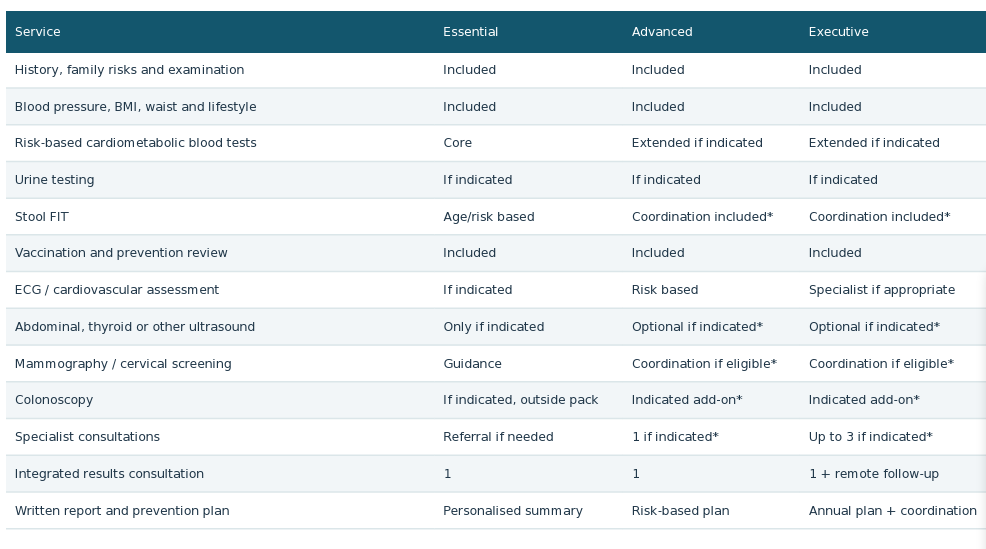
A fixed price requires advance definition of eligibility, risk profile, number of tests and partner-clinic fees. “Coordination included” does not mean that the procedure fee is included.
Selecting tests by age and risk
Ages 18–39
Focus on lifestyle, blood pressure, weight, vaccines, mental and sexual health, and selective blood testing. Routine whole-body imaging and tumour-marker panels are not recommended.
Ages 40–49
Review cardiovascular and metabolic risk. Colorectal screening begins at 45 in some guidelines and at 50 in some public programmes; adapt to local guidance and family history.
Ages 50–74
Consider colorectal screening, breast screening where applicable, and other evidence-based screening. Bone density assessment depends on age and risk.
Age 75+
Decide according to overall health, life expectancy, preferences and benefit–harm balance; avoid low-value investigations.
Women
Cervical HPV/cytology testing based on age and screening history; mammography based on age and risk; bone health where appropriate. Routine ovarian cancer screening with transvaginal ultrasound or CA-125 is not advised at average risk.
Men
Shared decision-making about PSA for suitable ages and risk profiles. Prostate ultrasound and tumour-marker panels are not universal screening tests.
Family history / high risk
May require genetic counselling, enhanced breast or bowel screening and specialist follow-up.
Responsible use of imaging and advanced tests
Whole-body CT (“Pan-CT”) is not recommended for routine screening of asymptomatic people: it may expose patients to unnecessary radiation, false positives and incidental findings. Low-dose chest CT can be appropriate for lung cancer screening in certain high-risk current or former smokers. Colonoscopy, ultrasound, MRI, PET-CT and tumour markers should be used for specific indications rather than universal screening.
How the fixed-price package works
1. Pre-visit questionnaire and records review. 2. Clinical triage and confirmation of package and add-ons. 3. Written fixed quote listing inclusions, exclusions and possible extras. 4. Coordinated appointments in Barcelona. 5. Final report in the agreed language and follow-up plan. Biopsies, further tests and treatment after an unexpected finding are quoted separately.
Informational service proposal, not individual medical advice. Availability of clinicians and investigations must be confirmed with partner centres. MSC · Medical Excellence. Personalised Care. Beyond Borders
Specialist Urology in Barcelona
Urological care for international patients
International patient care
MSC – Medical Services Connection facilitates access to specialist urologists in Barcelona for patients from Arab countries. Our approach combines personalised medical assessment, diagnostic coordination, treatment planning and follow-up, with respect for each patient’s cultural, language and privacy needs.
Urethral and genital reconstruction
Access to internationally recognised specialists in complex urethral reconstruction, including recurrent strictures, traumatic injuries, complications of previous operations, complex hypospadias and genital reconstruction. Techniques are tailored to anatomy and functional goals.
Laser prostate surgery
Endoscopic treatment of benign prostatic enlargement using laser techniques, including enucleation in selected patients, to relieve urinary obstruction and improve symptoms.
Urinary stone disease
Diagnosis and treatment of kidney and ureteric stones using flexible ureteroscopy, laser technology and, when appropriate, percutaneous procedures. Assessment also addresses recurrence risks.
Robotic urological surgery
Robot-assisted procedures for selected prostate, kidney and bladder conditions and certain reconstructive operations. Suitability depends on diagnosis, disease stage, patient factors and surgical expertise.
Andrology and male sexual health
Assessment of erectile dysfunction, Peyronie’s disease, male infertility and other conditions, with particular attention to penile implant surgery, confidentiality and shared decision-making.
A coordinated healthcare journey
Personalised support before and after travel
From first contact to follow-up
MSC supports patients from the initial review of medical reports and specialist selection through consultations, surgery where indicated and subsequent follow-up. A definitive treatment plan is established only after clinical assessment.
Communication and privacy
Care may be coordinated in Arabic, English or Spanish, subject to availability. We aim to provide respectful communication and discreet handling of sensitive medical information.
Urethral and genital reconstructive surgery
International experience in complex reconstruction
Specialist expertise
MSC facilitates access to an internationally recognised specialist in reconstructive urethral surgery with professional experience in Spain and the United Kingdom. Complex, recurrent and previously operated cases are assessed individually.
Conditions treated
Bulbar and penile urethral strictures; long or recurrent strictures; lichen sclerosus-related disease; post-traumatic injuries; complications of hypospadias; urinary fistulas; and selected female urethral and genital reconstructive conditions.
Reconstructive techniques
Depending on stricture site, length and tissue quality, options may include urethral anastomosis, augmentation urethroplasty or single- or multi-stage reconstruction. Techniques include oral mucosal grafts (commonly buccal mucosa), selected genital skin grafts and vascularised tissue flaps. Genital skin is not appropriate in every case, particularly where lichen sclerosus is present.
Assessment and planning
Evaluation may include uroflowmetry, cystoscopy, retrograde and voiding urethrography, and review of previous procedures. Goals include restoring effective urination, preserving tissue and reducing further interventions, while discussing recurrence and complications.
International patients
Reports and imaging can be reviewed before travel to help organise appointments. The team coordinates the stay and appropriate follow-up, including catheter removal and subsequent checks where needed.
Laser prostate surgery
Modern treatment for prostate-related urinary obstruction
Benign prostate enlargement
Benign prostatic hyperplasia may cause a weak stream, difficulty starting urination, incomplete emptying, urgency and nocturia. Surgery may be considered when medication is insufficient or complications occur.
Laser enucleation
Endoscopic laser enucleation removes obstructing prostate tissue through the urethra without abdominal incisions. It may be suitable for prostates of various sizes, including large glands, according to specialist assessment and available resources.
Benefits and limitations
In selected patients, laser techniques may reduce bleeding and support relatively rapid recovery compared with certain alternatives. Temporary irritative symptoms, infection, transient incontinence or changes in ejaculation can nevertheless occur. Treatment is individualised.
Assessment and follow-up
Preoperative evaluation may include PSA, urine tests, ultrasound, uroflowmetry and post-void residual measurement. MSC coordinates the care pathway and follow-up instructions after discharge.
Kidney and ureteric stones
Comprehensive urinary stone management
Understanding stone disease
Stones can cause renal colic, blood in the urine, infection or urinary obstruction. Management depends on size, location, likely composition and the patient’s clinical condition.
Treatment options
Options include observation, medication, rigid or flexible ureteroscopy with laser fragmentation, and percutaneous surgery for larger or complex stones. A temporary double-J ureteric stent may be required.
Infection and urgent care
Urinary obstruction accompanied by infection or sepsis requires urgent assessment and usually drainage of the urinary tract before definitive stone treatment.
Preventing recurrence
Beyond treating the immediate episode, clinicians may assess metabolic risk, analyse stones where possible and recommend individualised hydration, dietary and preventive measures.
International coordination
MSC helps review previous imaging, arrange procedures and organise post-treatment follow-up.
Robotic urological surgery
Precision with individualised surgical selection
How robotic surgery works
Robot-assisted surgery is a minimally invasive technique in which a surgeon controls articulated instruments from a console. The robot does not operate autonomously. It may facilitate dissection and suturing in selected cases, but is not always superior to other approaches.
Prostate
Robot-assisted radical prostatectomy for selected patients with prostate cancer, with oncological and functional planning focused on continence and, where feasible, preservation of erectile function.
Kidney
Robot-assisted partial nephrectomy for selected kidney tumours, aiming to preserve renal tissue when oncologically safe, and radical nephrectomy where indicated.
Bladder
Robot-assisted radical cystectomy in selected bladder cancer cases, including planning of urinary diversion and oncological follow-up.
Reconstructive surgery Selected reconstructive operations, including pyeloplasty, repair of certain ureteric strictures and ureteric reimplantation, depending on complexity and team expertise.
Clinical decisions and recovery
The choice depends on diagnosis, disease extent, alternatives and comorbidities. The team explains risks, potential conversion to another approach, expected hospital stay and follow-up.
Andrology, sexual health and male fertility
Specialist care with the utmost discretion
Confidential care
MSC coordinates access to andrology specialists for international patients, with particular attention to confidentiality, privacy during consultations and respectful communication. Medical information is handled discreetly under applicable regulations.
Erectile dysfunction and penile implants
Assessment considers vascular, hormonal, neurological and psychological factors. When other treatments are ineffective or unsuitable, penile implant specialists may discuss malleable and inflatable devices, expected outcomes, postoperative care, infection risks and possible revision surgery.
Peyronie’s disease and penile curvature
Assessment of deformity, pain and sexual function, with conservative or surgical options based on disease stability and patient goals.
Male fertility
Evaluation may include history, semen analysis, examination and hormonal or genetic tests when indicated. Treatable causes, varicocele, obstruction, sperm retrieval and assisted reproduction options are considered in coordination with fertility teams.
Other andrological conditions
Individualised assessment of hypogonadism, ejaculatory disorders and other sexual health concerns, with attention to reproductive plans.
Support for patients from Arab countries
Initial consultations and report reviews may be arranged before travel. MSC offers appointment coordination, language support subject to availability and treatment-specific follow-up.
23
Qualified Doctor's
5
Client satisfaction rate
12
Medical Departments
92
Cases successfully resolved
Expert
Providing
Quality Care Since
Day One
We act with discretion, reliability, and responsibility in all stages of the healthcare process, building transparent relationships centered on people.
Multilingual Team and Cultural Understanding
We value diversity through a multilingual team with deep knowledge of various cultural contexts, placing a special focus on supporting Arab-speaking patients.
Strategic Destination Positioning
We work to position Barcelona and Spain as preferred international destinations for patients seeking specialized, high-quality medical care.
Our company
Committed to your health every day
- Trust and Transparency
- Empathy and Personalization
- Medical Excellence
- Cultural Sensitivity
- Professionalism and Integrity
- Commitment Without Borders

Experience World-Class
Medical Care
Contact us
Your Care Journey in 4 Simple Steps
Book Appointment
Doctor Consultation
Diagnosis & Treatment
Recovery & Follow-Up
Make an appointment apply for treatments
Choose your option, select a convenient time, and confirm online — no waiting, no hassle.